
April 17, 2026
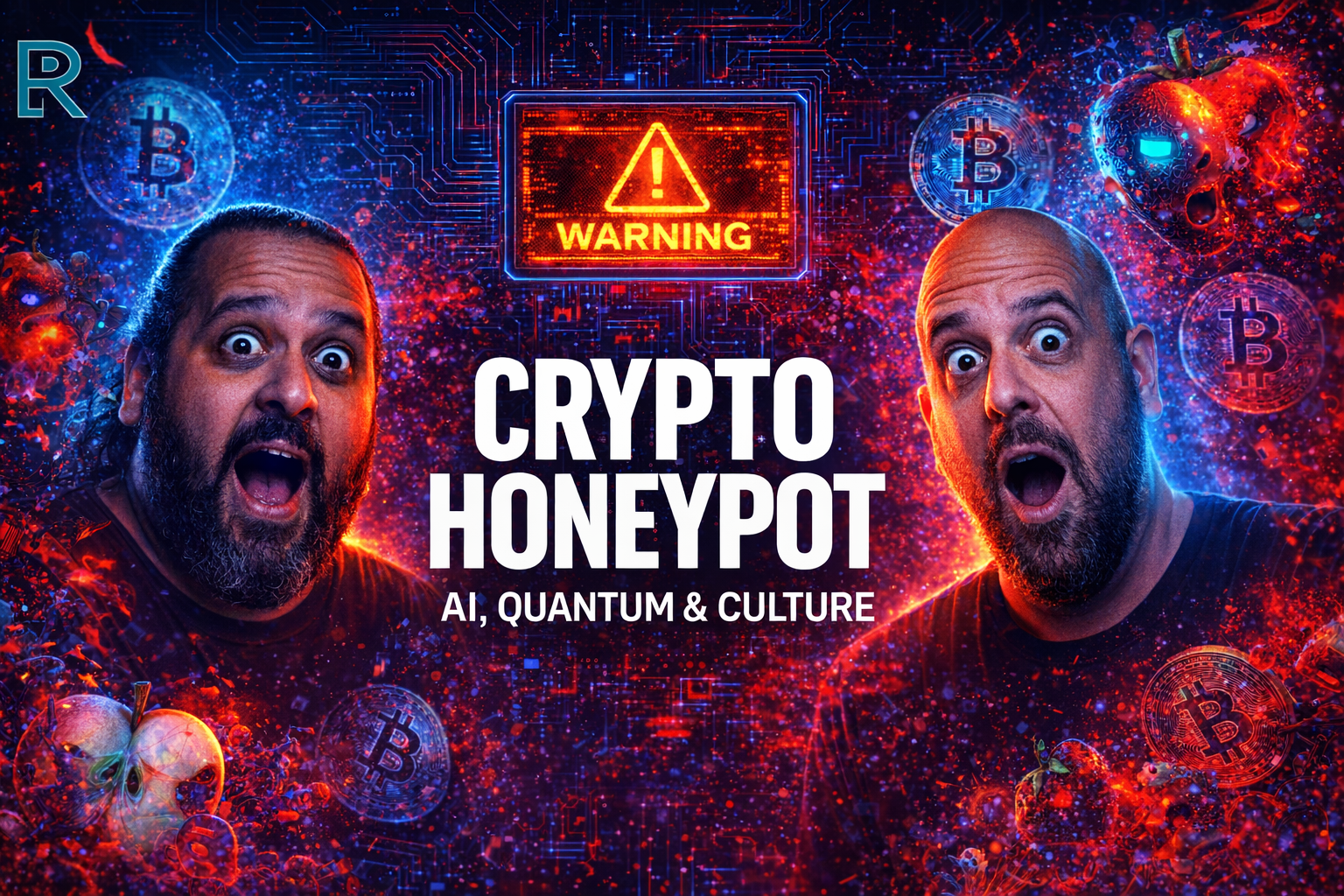
Episode 310 opens in a place that sounds unserious at first: K-pop demon hunters, AI fruit drama, and the weird internet universe sometimes labeled “brainrot.” But the deeper point from William, I-man, and TJ is actually sharp. Culture moves first. Most people only notice it after it has already become unavoidable.
That matters because AI is changing the speed of cultural iteration. You are no longer dealing with a world where one meme, one visual language, or one format takes months to spread. A creator can find a pattern, copy the structure, alter the characters, and produce a new version almost instantly. The hosts describe the AI fruit-video phenomenon as a perfect example. Someone discovered a format people wanted to watch, and suddenly the ecosystem expanded into endless variants, each tuned for attention.
The bigger takeaway is not that AI fruit videos are profound art. It is that demand reveals itself through repetition. If millions of people keep clicking on the same style of content, that is not random. That is a live read on what the market wants.
William makes the point clearly: if you want to build with AI, it is not enough to “learn AI.” You have to build the right thing, present it the right way, and speak in a tone that matches the current cultural moment. Otherwise, you are just burning credits and convincing yourself you are innovating.
That idea leads directly into one of the episode’s most important themes. The team argues that culture is not decoration. It is part of the product stack.
This is why they compare the current AI-content explosion to earlier NFT cycles. In both cases, a handful of successful formats quickly turned into thousands of lookalikes. Tutorials spread. Tooling became standardized. New entrants copied whatever seemed to be working. The result was not just content creation. It was industrialized cultural manufacturing.
What makes the current moment different is the speed. An operator can screenshot a winning video, reverse-engineer the structure, modify the characters, and regenerate the format through tools like ChatGPT and image models. That lowers the cost of experimentation dramatically.
The hosts do not frame this as purely positive or purely negative. They treat it as reality. If culture is moving this fast, then builders who refuse to pay attention will end up creating products for a world that no longer exists.
That cultural lens flows into the NAT.fun discussion, but this section needs a clear disclosure up front: the hosts are not neutral observers here. They are discussing a platform they are closely associated with, which means the argument is best read as an informed but interested case for a different launch model.
Framed charitably, their thesis is not that NAT.fun should manufacture culture on demand. It is that the platform should make it easier for markets to discover what culture already values, then let that signal show up through participation instead of pure narrative.
That is a more durable thesis than simply chasing trendiness, but it is not risk-free. A market-led system can still be noisy, speculative, and vulnerable to crowd reflexivity. The stronger argument is not that NAT.fun eliminates those problems. It is that it may expose them more honestly and earlier.
The team emphasizes that the best things created on the platform may not come from them. That is the upside of a platform model. Outside creators can surface ideas the internal team would not have predicted, and the market can react in public instead of after a long private buildup.
That is where the market-discovery angle becomes central. Social metrics alone are weak signals. Retweets can be gamed. Follower counts can be inflated. Hype can be manufactured. And money is not a perfect signal either. But when people are actually committing capital, the signal can be harder to fake than pure social engagement, which is why the team keeps coming back to participation over applause.
The second major pillar of the episode is the quantum-risk discussion around crypto. The hosts treat it as a serious warning sign, not because they claim an immediate break has arrived, but because the research conversation has moved far enough that the industry should stop treating it like a purely academic sideshow.
Their framing is blunt, but the careful version of the argument is stronger. If a meaningful cryptographic break ever does arrive, cryptocurrency would be one of the most visible early public proving grounds. Chamath’s 'honeypot' framing comes up in the conversation because crypto combines symbolic value, liquidity, and global attention in a way few other targets do.
That does not mean the threat is tomorrow morning or that every institutional warning implies near-term catastrophe. It means the downside is large enough, and the signaling from major researchers and institutions serious enough, that the space should prepare earlier than its default instincts suggest.
So the useful takeaway from the episode is not panic. It is posture. The hosts are arguing that the industry should stop treating quantum risk as a distant abstraction and start treating it as a real planning problem with technical, political, and reputational consequences.
The quantum threat then leads into a more political question about Bitcoin development. Even if the risk is real, how would the ecosystem coordinate an actual response?
The episode raises a hard possibility: that capital incentives may matter more in Bitcoin governance than many people want to admit. If protocol changes only gain real momentum when sufficiently funded interests line up behind them, then the response to a major existential risk may be less principled and more transactional than the average holder expects.
That does not mean the hosts think every developer is corrupt. It means they are skeptical of romantic myths. Developers need funding. Institutions have agendas. High-stakes technical decisions rarely happen in a vacuum. And if quantum pressure accelerates, the politics around upgrades could get ugly fast.
One of the reasons this discussion lands is because it is paired with an economic reality the team has already been talking about for months: Bitcoin security is not just a technical issue. It is an incentive issue. If the ecosystem is slow, undercoordinated, or captured by the wrong capital flows, the problem gets worse.
The back half of the episode turns into a critique of the Ordinals ecosystem, especially the gap between ambitious narratives, fundraising energy, and eventual execution. The names that come up in the conversation, including Taproot Wizards and Quantum Cats, are best understood here as examples in the hosts’ broader argument, not as settled proof of misconduct.
The team walks through the scale of the drawdown and the distance between peak storytelling and current market reality. In their telling, what once looked like a sweeping thesis around Bitcoin programmability and ecosystem expansion now looks much weaker in hindsight. That does not prove bad faith on its own, but it does make the original narrative harder to defend at face value.
The critique is not just that prices went down. Prices go down all the time in crypto. The harder question is whether capital and attention were drawn in around a future whose delivery was far less certain than the surrounding narrative may have suggested.
That is the point the hosts keep pressing on. If you raise around the implication that a meaningful protocol or infrastructure breakthrough is effectively in the bag, then you are not just selling art or community. You are also selling confidence in a technical roadmap. And if that roadmap turns out to be much less certain than buyers assumed, the narrative supporting the raise looks weaker in hindsight.
The episode uses that tension as a contrast case for NAT.fun’s preferred model. Instead of extracting large sums of capital upfront based on future-facing promises, start closer to zero and let confidence build through visible participation. Even then, the tradeoff is not purity. It is simply a different structure with different risks, one the hosts believe is more honest about uncertainty.
That brings the conversation back to first principles. The hosts argue that one of the biggest mistakes in crypto is assuming value before the market has actually validated anything.
A structure that begins at zero and lets demand reveal itself in public does something important. It avoids pretending that future execution is already complete. It lets participants price evolving confidence instead of blindly funding a pitch deck.
That is why the bonding-curve discussion matters in the episode. It is not just about price mechanics. It is about honesty. A market-discovery mechanism forces creators and communities to earn momentum instead of inheriting it through marketing theater.
In a world where so many projects have relied on followers, pre-sales, and vague roadmap promises, that is a meaningful shift. It aligns much more naturally with the kinds of signals the team says they trust: usage, participation, and sustained market conviction.
What makes Episode 310 interesting is that all of these topics are connected, even if they seem unrelated at first.
AI brainrot content is really a conversation about cultural discovery. The quantum discussion is really a conversation about technical fragility and institutional response. The Ordinals critique is really a conversation about narrative-driven capital formation and what happens when execution lags. NAT.fun is presented in the episode as one attempt to respond to all three, though that thesis still has to earn its proof in the market.
The team is making a broader claim: the next phase of crypto may reward systems that adapt to culture faster, speak more honestly about uncertainty, and ground themselves in visible incentives rather than pure narrative. That is an argument, not a settled fact, but it is the backbone of the episode.
Episode 310 lands at a moment when crypto is being pulled in multiple directions at once. AI is changing how attention forms. Quantum research is raising the stakes around cryptographic assumptions. Older NFT and Ordinals narratives are being stress-tested by time. And new launch models are being evaluated by a market that is far less forgiving than it was a few years ago.
That is why this episode works as more than commentary. It offers a framework for reading the current market, while also exposing the tensions in the hosts’ own preferred solutions.
If the team is right, then the builders who win from here will not be the ones with the loudest narrative. They will be the ones who understand culture sooner, structure incentives more honestly, and let the market validate progress in public.
For The Block Runner crew, that is the lane NAT.fun is trying to occupy. The open question, and the one the market will answer, is whether that model can actually deliver on the honesty and discovery it claims to prioritize.


