
March 13, 2026
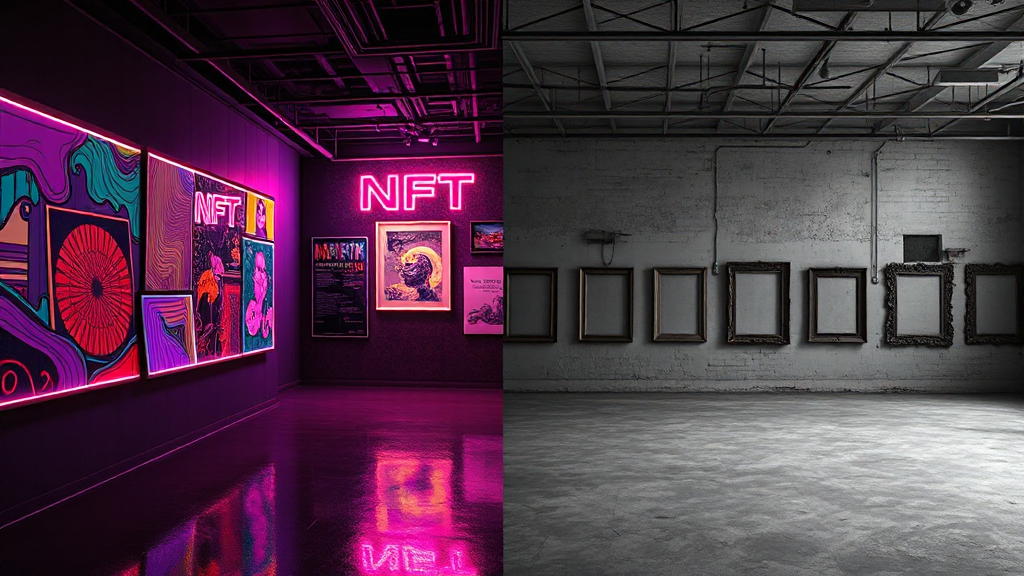
Charles Hoskinson-yes, the Cardano guy-just walked onstage dressed as a McDonald’s employee to signal the crypto industry’s latest existential crisis. It sounds like shtick, but let’s not kid ourselves: the desperation runs much deeper, especially in the digital art world. Eight hundred and twenty-one thousand people just watched a single tweet go viral with one message… “I’m going to spend $100K this year buying NFTs from struggling artists-and I know it’s not enough.” Instantly, replies poured in: “Will you buy my art?” “Please look at mine!” “I can’t survive.” Bitcoin is still pushing all-time highs. But in the NFT trenches, creators are holding digital garage sales to make rent.
Why are so many builders, collectors, and artists in crypto feeling this sharp, hollow ache-a mood so bleak even Charles is roleplaying fast-food despair? Here’s the gut-punch: It’s not because NFT technology failed. It’s because the entire incentive model for making, promoting, and collecting digital art became a rigged casino-and the house always won. Is it really over for NFT creators? Or is there a way to separate the sins that killed the last cycle from the next chance for a digital art renaissance?
Let’s set the stage. The NFT boom wasn’t a small blip. It was a $50 billion explosion, with everything from Cryptopunks to Bored Apes minted, flipped, and hyped to superstardom. At the peak, digital collectibles outranked sports cards and rivaled fine art auctions on volume. I remember watching even the Netflix doc “King Collector” and thinking, “This is it. Web3’s final form is here.” But the mechanics underneath? Rotten to the core.
Three quick data points:
- According to NonFungible.com, primary NFT sales dropped 85% from 2022 highs.
- Collections like Meccaverse made $60 million in days-then vanished, as founders ghosted and Discords died.
- Even that tweet-“I’m spending $100K on digital art this year”-got 821,000 impressions…but almost every reply was a public cry for help: “Please, I’m starving. I need your ETH.”
That’s not creative culture. That’s a famine, triggered by how these NFT projects launched in 2021. Collectors paid hundreds or thousands to artists, who (rationally) had no reason to stick around after their windfall. The playbook: hype, mint, disappear. Within weeks, most art crashed 95%, burning everyone but a handful of insiders. As Iman put it on the show: “You can write all day about starving artists, but if you’re not fixing the problem, nothing will change.”
So what actually went wrong in the NFT economy? It comes down to what I call the “seven deadly crypto sins.” Not greed or lust-a much geekier set of crimes baked into the way platforms and collections were engineered. Here’s a taste, as we kicked off in our “Net.fun” campaign brainstorm:
1. Supply Dilution: Projects like Nifty Gateway and Meccaverse kept expanding supply for revenue, blind to holder dilution. It was rug-pulling 2.0.
2. Misaligned Incentives: Artists got paid once, then lost any reason to create, engage, or build community.
3. No Exit Path: NFT liquidity evaporated after the hype. Holders were trapped-art became illiquid, valueless JPEGs.
4. Opaque Launches: No clarity when or how supply would change, so secondary markets were always out-gamed.
5. Cash-Grab Hype Cycles: Makers front-loaded “hype machines”-raking millions before any tech or art proved its worth.
6. Arbitrary Expansion: Expanding collections with zero transparency, just to re-monetize existing communities, killing trust.
7. Collector Burnout: Every new drop raised expectations, but delivered less. Enthusiasm turned to apathy, then anger.
As a builder, I’m flat-out saying: these models weren’t just unsustainable-they were mathematically doomed. Proof? Nifty Gateway, once the darling of NFT launchpads, just folded. Meccaverse founders haven’t tweeted since December. It’s not just “bear market blues.” It’s factory-engineered stagnation.
So, what’s the fix? Let’s get tactical, because I see only one way forward. Rather than launch JPEGs like ICOs-with arbitrary supply, hype-driven mints, and vanishing founders-we need to inject real constraints and incentive alignment. Here’s what I see as the ultimate antidote (and, shameless plug, it’s what we’re building with Net.fun):
1. Supply Governed by Bitcoin: Tie new NFT/art asset issuance not to hype, but to Bitcoin’s block rhythm or an on-chain verifiable pattern. That’s ungameable math, not marketing smoke.
2. Ongoing Creator Incentives: Via dual-market systems (non-arbitrary tokens, or “NATs”), creators earn as their project’s community grows and trades-not just at the initial sale.
3. Transparent Expansion: Project founders set the “expansion pattern” in advance; collectors know exactly when more supply comes, removing dilution FUD.
4. On-Chain Settlement: Everything-mints, royalties, governance-is done on-chain, not in some Discord mod’s spreadsheet or by surprise.
5. Market Signaling: If a project loses steam, its supply stalls and incentive declines-a direct market feedback loop, not a slow, painful death by abandonment.
As Iman said on the podcast: “The problem isn’t people don’t want NFTs. It’s how NFTs got distributed. The delivery method, not the digital art, was broken.”
Think about it: Bitcoin can’t run off to Dubai on the community’s money. It can’t “dilute” supply overnight. That’s the spirit we need for next-gen NFT economics.
Ironman put it perfectly: “Web3 is missing native business models. Subscriptions changed the Internet, but crypto’s answer is still stuck in 2021.” Enter “internet capital markets”-a new infrastructure stack, built on chains like Solana, that automates fair launches and aligns creator and community incentives. This is how meme coins exploded-applications like pump.fun showing how non-arbitrary tokens (NATs) can bootstrap communities, distribute ownership, and keep creators invested.
The numbers are wild:
- Platforms like pump.fun saw over $1 billion in trading volume in 30 days, onboarding tens of thousands of new holders into “tokenized” fandoms.
- For the first time, creators could capture value in real-time as market activity grew, not just from a one-time mint.
- When tied to “expansion patterns”-transparent rules for new token/NFT issuance-liquidity boosts long-term alignment, and market signaling punishes low-effort projects instantly.
Net.fun takes this dual-model-liquid tokens plus non-arbitrary, on-chain NFT supply-and applies it directly to the digital art renaissance. Community determines which brands flourish; ongoing creator incentives mean builders stick around. No one gets rugged. No more McDonald’s cosplay. No more digital famine.
What happened when we took this message to the artist trenches? For the first time in months, I saw 30+ creators on a Discord call not just nodding along, but firing off smart questions…and real hope. Not “please, buy my JPEG.” Instead: “How does the supply pattern work?” “How do royalties scale?” “How does the market decide what gets minted?”
Several quotes stuck with me:
> “You can’t just dump art and walk away anymore. There’s a feedback loop now. If you keep building, you keep earning.”
- Ironman, on the new incentive model
> “It’s a web3-native business model. Not a charity. Not a cash grab. The community decides the winners, and the winners keep building.”
- William (that’s me, yes I’m quoting myself)
Just having the tech isn’t enough. The community and creators need to believe their relationship is “locked in”-not with hype, but with unbreakable math and transparency. That’s what happened when meme token infrastructure got repurposed for art. More importantly: It removes the old rug-pull playbook almost entirely. If a project dies, everyone knows exactly why (the market didn’t care, or the creator stopped building). Nothing is hidden. Every expansion is predicted, every incentive visible.
Sometimes you have to torch your own house to build a fortress. That’s why I believe the next wave won’t be “NFT 2.0”-it’ll be internet-native brands and experiences powered by transparent, ongoing alignment. Anyone trying to “Robin Hood” $100K around the art world (like that viral tweet) is treating symptoms, not the disease.
What’s the real solution?
- Trustless market structures, with transparent, on-chain expansion.
- Alignment between creators and holders, ensuring value accrues over time and rugpulls are mathematically deterred.
- The community picking the winners, like a live, on-chain focus group.
Look around right now: It feels like a nuclear bomb went off in the NFT space. Websites gone, major launchpads bankrupt, artists relegated to Twitter begging for ETH. This is not what we signed up for. And as we prep the public launch of Net.fun, I’m staking my own reputation on this: Locking NFT and token supply mechanics to uncheatable, block-by-block expansion-plus ongoing, market-driven incentives-is the only architecture that can rebuild trust for the next generation of on-chain creators.
I’ll be blunt: “If we’re wrong, the famine continues. If we’re right, this becomes the mold every successful web3 brand will copy.”
I don’t sugarcoat: the NFT market is littered with the corpses of once-hyped collections, and the incentive games that got us here are dead ends. But every collapse is an invitation-an open sea of white space for builders gutsy enough to write new rules. The NFT winter isn’t a bug. It’s a system-wide “timeout” for us to fix what was fundamentally broken.
Are you a creator tired of riding the hype cycle and getting nothing but dashed hopes? Are you a collector burned too many times to trust another Discord “reveal?” Or are you just here for the memes-the moment when digital art culture finally levels up? We’re about to flip the switch. If you want in, now’s the time to watch closely.
“We broke all of this down on Episode 302. And we’ll be revealing the full ‘Seven Deadly Crypto Sins’-and exactly how to fix them-on the next show. The nuclear winter is ending, but only for those who want to build with atomic transparency. Subscribe to The Block Runner before you miss the next supply shock.”
Open Question:
If on-chain trust can finally fix digital art’s incentive gaps, what happens when the model conquers gaming, social, and finance next? Stay tuned-the real airdrop is coming.


